
Steady replaces status update meetings with a combination of tool integrations, async check-ins, and AI agents called Echoes — so you get real-time project visibility without pulling anyone into a meeting. Connect your tools, bring in human context through lightweight check-ins, and let AI synthesize it all into answers you can act on.
Key Takeaways
- Connect project tools (GitHub, Jira, Linear, Asana, and dozens of others) so Steady pulls status automatically
- Async Smart Check-ins capture human context tools can’t – blockers, intentions, scope changes
- AI agents (Echoes) synthesize everything into scheduled answers you can act on
- Replace a 30-minute weekly sync with a Monday morning Echo that takes zero effort
Why status meetings don’t work
According to the research team at Asana, managers are now spending 5.8 hours per week in completely unnecessary meetings as they try to manage top-down strategy and keep projects on track. If there’s one kind of meeting every manager should cut from their week it’s the status update sync.
Progress update meetings are a waste. Whether it’s a weekly recurring or a daily standup as you approach a launch, these types of low value meetings don’t need to happen, and they won’t contribute to team building. They’re a crutch we fall back on when we don’t have enough visibility. Our intention is to create momentum but we end up stealing time that could be spent driving work forward.
What’s worse: Bad meetings, like the ones dominated by status updates, get in the way of good meetings. Good meetings create connection and facilitate collaboration. The goal isn’t to eliminate all meetings entirely, but rather to make space for the work that’s made better when humans work together.
In a world where AI agents can do everything from manage your email inbox to post on their own social network, offloading the task of grabbing status updates is an obvious win. Every manager can use AI to get immediate visibility into project status without a calendar invite.
What it actually takes to replace the status meeting
At a high level, here’s what you need to do:
- Give trusted AI systems secure access to all the status updates across your tools and systems. Your team’s progress doesn’t live in one place. It’s scattered across GitHub pull requests, Linear issues, Trello cards, Asana tasks and Slack threads. Any solution that only looks at one tool gives you a partial picture—which is no better than what you already have.
- Give trusted AI systems access to the human context that tools can’t capture. This is the part most people miss. A card sitting in the “In Progress” column on a kanban board doesn’t tell you that the engineer working on it is blocked by a design review, or that the scope changed in yesterday’s conversation, or that the deadline shifted because of a dependency on another team.
Tools capture artifacts. Humans hold context. You need both.
How to solve the status problem with Steady
Connect your tools, bring in human context, and use AI to solve the visibility problem.
Connect your tools with integrations
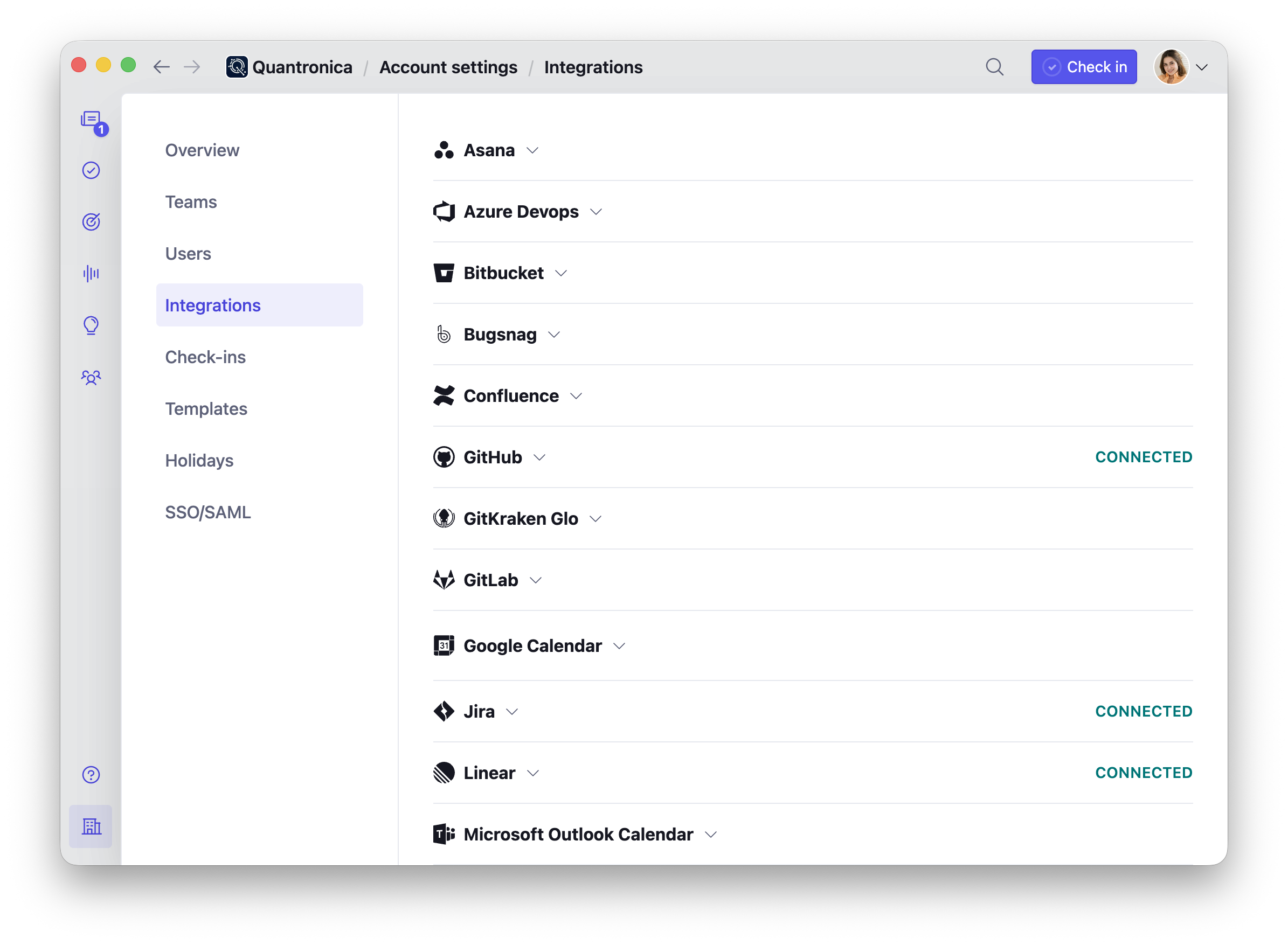
Steady integrates with 20+ tools where your project status actually lives, pulling in progress signals automatically. No manual entry. No copy-pasting from one dashboard into another.
- GitHub for pull requests, commits, code reviews
- Jira for issues, sprints, epics
- Linear for issues and project tracking with due dates
- Trello for cards and boards
- Asana for tasks and projects across portfolios
- Monday for boards and updates
Find your favorite tools on the full list of Steady integrations
Pull in human context asynchronously
Smart Check-ins capture the human context that no project management tool can — in about 2 minutes a day. This is what sets Steady apart from just plugging an LLM into your project management tool.
Steady proactively gathers human context like:
- Daily check-ins: Lightweight async standups where team members share blockers and plans for each day
- Intentions: What people actually plan to do, not just what’s assigned on the board
- Goal stories: Narrative updates tied to your team’s objectives for each cycle of work
This human layer is critical. It’s the difference between “this ticket is in progress” and “this ticket is in progress but blocked because we’re waiting on API access from the platform team, and it’s at risk of slipping the release.”
Steady tells a story beyond the simple status.
Make visibility programmatic with AI
Steady’s AI agents, called Echoes, synthesize updates from all your tools and team check-ins into scheduled answers you can act on — daily, weekly, or whatever fits your workflow.
Instead of calling a meeting, you set up an Echo and let it do the work for you. AI parses through the latest updates across teams and projects so you know whether you need to intervene to pull things back on track. Echoes always include receipts — traceable links back to source data — so you can verify anything that looks off.
Here’s an example prompt you can use in Steady:
What is the current status for the project attached to our goal for this cycle? Identify blockers and dependencies.
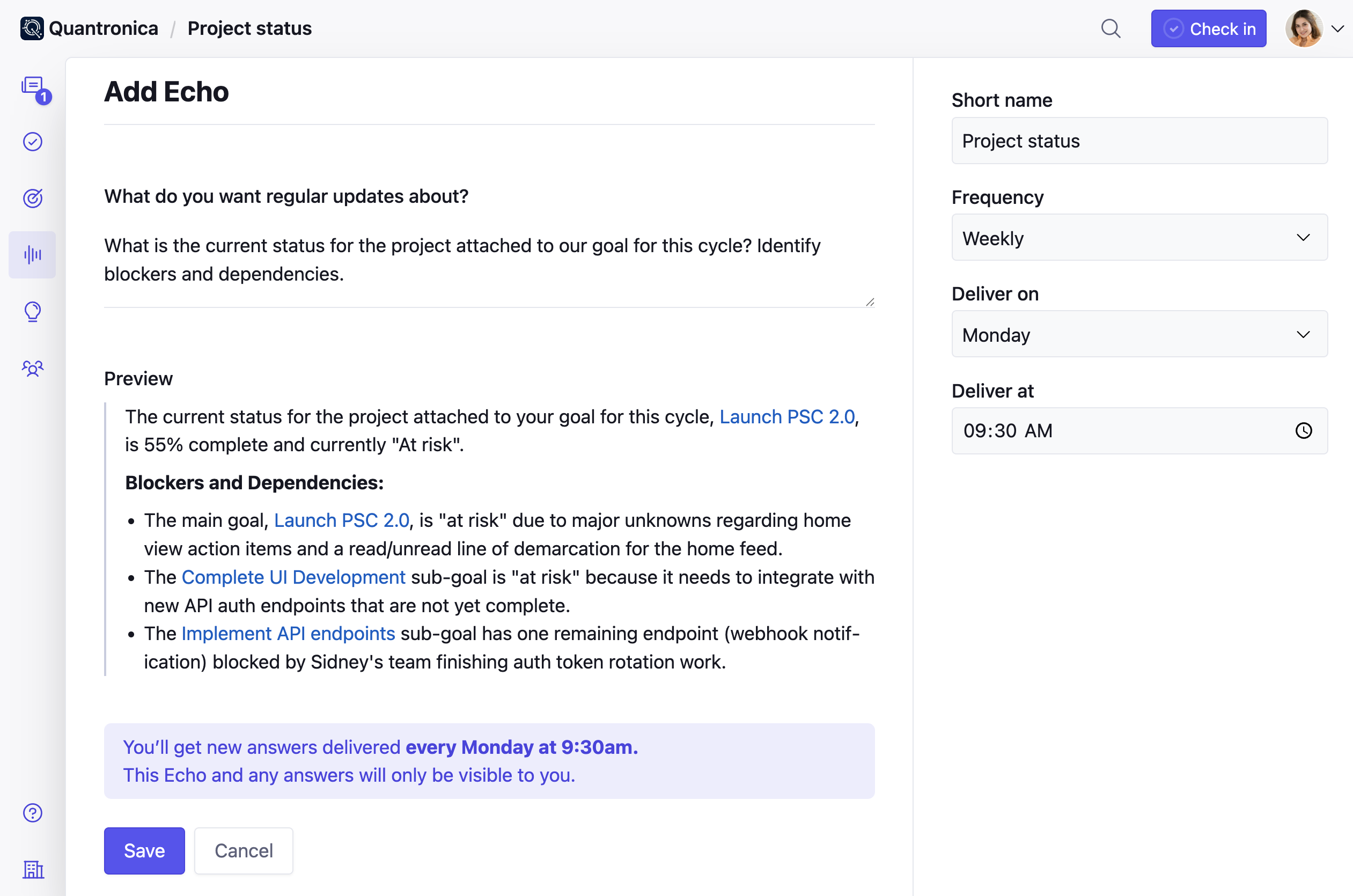
Schedule it for Monday mornings and you’ve just replaced your weekly status meeting. Schedule it daily and you have real-time visibility without ever pulling someone out of deep work.
Key Insights
- Replacing status meetings requires both tool data and human context — tools alone give you a partial picture
- Smart Check-ins take about 2 minutes to complete and capture the intentions, blockers, and scope changes that project boards miss
- Echoes (AI agents) deliver scheduled answers synthesized from all sources, so you get visibility without calling a meeting
- Start with a weekly Echo for Monday mornings to replace your status sync, then expand to daily for real-time visibility
Ready to let AI handle your status updates?
Stop spending your weeks chasing updates across tools and sitting through meetings that could have been a message.
Try Steady for free with your whole team. Seats are unlimited and you get 100 credits for every team member who signs up with you.